Ao (Chungli): the language of Mokokchung
Ao is not one language but a small cluster of them, and the variety that carries the weight of print, preaching and schooling is Chungli. It is tonal, it builds words by stacking suffixes, and it has a written tradition older than most languages in the region.
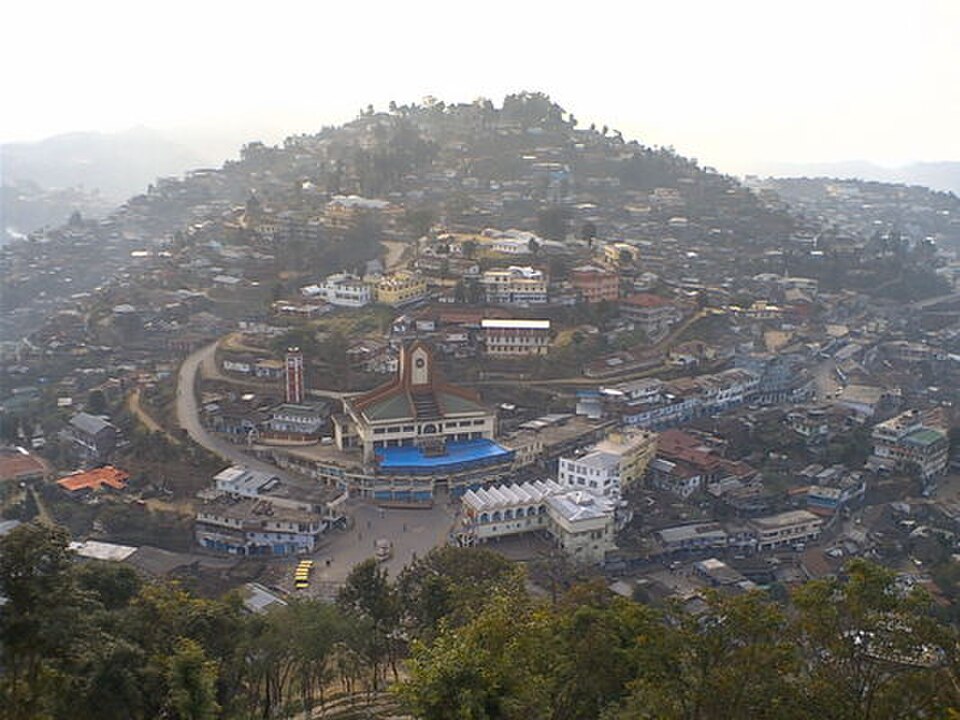
One name, three languages
"Ao" names an ethnic group of roughly 227,000 people, concentrated in Mokokchung district in northern Nagaland. It also names a dialect cluster in the Sino-Tibetan family, and the word "dialect" undersells the distance involved. The three principal varieties, Chungli, Mongsen and Changki, are frequently not mutually intelligible. Speakers from different villages may well switch to Nagamese or English to be sure of each other.
Chungli is the prestige variety. It is the one taught in schools up to class ten in Mokokchung, the one the Bible was translated into, the one used in church services and public announcements, and the one the local newspapers Tir Yimyim and Ao Milen are published in. When a resource (including this one) says "Ao" without qualification, it almost always means Chungli.
Writing Ao: what you will actually see
A unified written Ao dates to the American Baptist mission. Edward Winter Clark reached the Ao village of Molungkimong in 1872, and the standardisation of a common written form using the Latin script followed from that contact. The orthography stuck.
Linguistic descriptions of Ao use tone marks and IPA symbols: you will see forms like pá, aŋó, -tepuŋ. Almost nobody writes that way in practice. Everyday Ao writing uses plain Roman letters with ü as the one non-English character, and leaves tone entirely unmarked. So ni pá aŋó in a grammar becomes ni pa ango in a text message.
This guide gives the everyday spelling, because that is what you will need to read and type. Where a suffix has several common written forms (-cu, -chü and -tsü are all the same future marker), all of them are noted.
Three tones
Chungli Ao is tonal, with three register tones: high, mid and low. Tone is contrastive (it distinguishes words that are otherwise identical), which means that getting it wrong does not merely sound foreign, it can produce a different word.
The system has some interesting downstream behaviour. A high tone before a low tone often surfaces as a falling contour, and a good number of apparent high tones are really mid tones that have been upstepped because a low tone follows. If you are learning by ear from a speaker, this is one of the things that will make careful imitation more useful than any written description.
How Ao sentences are built
Ao is Subject–Object–Verb with postpositional case marking. Verbs are highly agglutinative (suffixes stack up to carry tense, aspect and mood), but they carry no agreement at all. A verb tells you when and how, never who.
Pronouns
| English | Ao (Chungli) | Notes |
|---|---|---|
| I / me | ni | |
| you | na | nü in some case forms |
| your | ne | |
| he / she | pa | written pá with tone |
| we (inclusive) | asenok | includes the person addressed |
| we (exclusive) | onok / unok | excludes the person addressed |
| they | parnok | also functions as "their" |
asenok means "you and I", onok means "us but not you".Basic sentences
Note the last one carefully: subject, object, verb, exactly in that order. And note the question: Ao asks "your name is who?", using shiba "who" rather than "what".
Adjectives follow the noun
Attributes (adjectives and quantifiers alike) come after the head noun, which is the reverse of English.
The full system (noun classes, the nominative -i, the tense suffixes and the two negation prefixes) is set out in the Ao grammar guide.
Everyday Ao phrases
These are taken from the community Ao phrase set. Ao has considerably less digital text than Nagamese, so this list is shorter than the Nagamese equivalent, and contributions from speakers are correspondingly more valuable.
| English | Ao (Chungli) |
|---|---|
| What is your name? | Na tenüng shiba? |
| I know. | Ni metet. |
| I don't know. | Ni memetet. |
| I don't know, bro. | Odi, ni iba memetet. |
| How do you know? | Na kechi jagi metet? |
| I love you. | Ni na meimer. |
| This is very good! | Iba ya kanga tajung! |
| Bro, this is really amazing! | Odi, iba ya kanga dang tesungmangtsüka! |
| This is not good. | Iba ji majung. |
| This is not good, stop it. | Iba ji majung, tokang. |
| I don't speak Ao. | Ni Ao oshi mejembi. |
| Bro, what are you doing? | Odi, na kechi aser? |
Core vocabulary
| Ao | English | Ao | English |
|---|---|---|---|
metet | know | memetet | not know |
angatet | understand | mangatet | not understand |
meimer | love | tenüng | name |
tajung | good, great | majung / tamajung | bad, evil |
kanga | very | tesungmangtsüka | amazing, surprising |
oset | thing, object | tokjang | leave it, let it go |
odi / ati | elder brother, "bro" | tzü | water |
ao | go (aor "is going") | aru | come |
achi | eat | ajem | drink (ajemer "drinks") |
mejang | sleep (mejanger "is sleeping") | oshi | speak, language |
ki | house | aser | and |
Question words
| Ao | English |
|---|---|
shiba | who |
kechi | what |
kong | where |
kodang | when |
koda | how |
kechiba | why |
Counting in Ao
| Numeral | Ao | Numeral | Ao |
|---|---|---|---|
| 1 | ka | 6 | terok |
| 2 | ana | 7 | tenet |
| 3 | asem | 8 | ti |
| 4 | pezü | 9 | teku |
| 5 | pungu | 10 | ter |
| 20 | metsü |
pungu "five" is worth noticing: Sümi uses the same form. Shared numerals of this kind are part of the evidence that the Naga languages, however unintelligible they are to each other today, descend from a common ancestor.
A passage of real Ao
Phrase lists only take you so far. Below is a short historical passage in Chungli Ao with a translation supplied by an Ao speaker. Read the Ao first and see how much the grammar above lets you unpick before you look at the English.
Kizük nung, Aoer tetsü-tebou parnok Chungliyimti lima nung alir liasü. Idangji parnok kin aser oshiji tulu aser tasü tait liasü. Khristan tamangba tashi mangateti alidang, parnok sangwa tesüsa tsububa aser kishi-kiaba nung jenteta liasü. Süra tashi, parnoki anogoshi mapang nung jumi luia mapang pshia liasü. Parnok kijük aser sobaliba jembiba jentettsü asoshi tsüngrem tenüng nung pelatepba benjungmungmung tenzük.
Contributed Ao passage on the origins of the Ao people
Translation. In the beginning, the Ao ancestors lived in the land of Chungliyimti. At that time, their tribe and language were very great and courageous. Before understanding the Christian faith, they lived relying heavily on traditional taboos and village fortification. Even so, they spent their daily time actively working in jhum cultivation. To preserve their history and culture, they began celebrating joy-filled festivals in the name of God.
What to notice
nungis the locative postposition, "in / at". It appears twice in the first sentence, once for time (Kizük nung"in the beginning") and once for place (lima nung"in the land").parnokis doing genitive duty ("their tribe", "their history") as well as being the third person plural pronoun.parnokiin the fourth sentence adds the nominative marker-i, flagging "they" as the active subject of a transitive verb.mangateticontains the negative prefixma-onangatet"understand": "without understanding".aser"and" linkskin"tribe" withoshiji"the language": wherejiis functioning as a definite article.asoshiis the benefactive, "for" or "in order to".
Festivals and the calendar
Two festivals anchor the Ao year, and both are agricultural. Moatsü falls in the first week of May, after sowing is finished: a deliberate breathing space after the hard work of clearing fields and burning jungle. Tsüngremmong, the harvest festival, comes in August and is the larger of the two, marked by prayers, singing, dancing and feasting.
The Ao were the first Naga group to convert to Christianity in large numbers, following Clark's arrival in 1872, and both festivals are now celebrated in an explicitly Christian frame. The traditional religion that preceded it was animist, with Lichaba the creator as the most highly revered figure.
Geographically, Ao territory is organised around six hill ranges (Tzürangkong, Japukong, Jangpetkong, Asetkong, Langpangkong and Ongpangkong), and the names are transparent once you have some vocabulary. Aset means "island", and Asetkong sits between two rivers; Ongpang means "higher", and Ongpangkong is the highest and coolest of the six.
Common questions
Is there a free English to Ao Naga translator?
Yes. The NagaTranslate translator supports English↔Ao (Chungli) at no cost. Ao is a genuinely low-resource language, so treat output as a first draft: it is reliable for common phrases and much less so for long or technical text.
How many people speak Ao?
Around 227,000 people identified as Ao in the 2011 Census of India, with roughly 130,000 reporting Chungli specifically as their mother tongue.
Is Ao related to Nagamese?
Not closely. Ao is Sino-Tibetan; Nagamese is an Assamese-lexified creole and therefore Indo-Aryan in its vocabulary. Most Ao speakers use Nagamese as a second language for talking to other Naga communities.
Do I need to learn the tones?
To speak, yes: tone is contrastive. To read and write, no, because writers do not mark it. This asymmetry is why learning from a speaker beats learning from text.
Sources and further reading
Grammar descriptions on this page are drawn from the reference material listed below and from the community phrase set behind the translator. Where the sources disagree with each other, or a speaker's correction disagrees with both, the speaker's usage is followed.
- NagaTranslate Ao reference notes and community phrase set: the grammar and phrase data behind the translator
- Contributed reading passages with speaker corrections: annotated Ao texts submitted by native speakers
- Ao language: dialect classification and phonology overview
- Census of India 2011, Language tables: speaker figures