Sema (Sümi): the language with the uvulars
Every Naga language sounds distinct to its neighbours, but Sümi is the one that sounds distinct to linguists. It has uvular consonants (sounds made far back in the throat) that no other Naga language has. It also has one of the more elaborate case systems in the region, and five different ways to say "not".
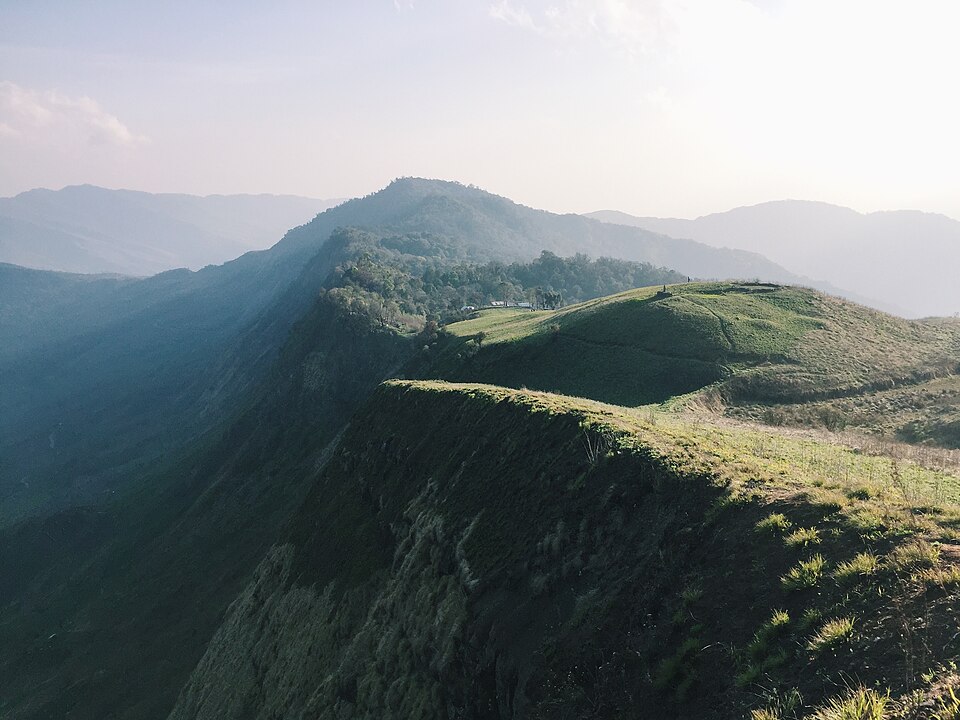
Who speaks Sümi
Sümi (historically written Sema, and still officially recorded that way in places) is a Sino-Tibetan language spoken by the Sümi Naga. The 2011 Census of India recorded a Sümi population of over 236,000 in Nagaland, making it one of the larger Naga communities.
The heartland is Zünheboto district in central Nagaland, but Sümi speakers are spread considerably wider than that: substantial numbers live in Niuland, Dimapur, Chümoukedima and Kiphire districts, and there are Sümi villages across the state border in Tinsukia district, Assam.
The language has several regional varieties: Dayang (also called Western Sümi), Lazami, Jimomi and Zumomi among them. The material on this site describes the standard written form used in Sümi literature and school texts.
The sound that sets Sümi apart
The distinguishing feature of Sümi phonology is its uvular consonants: stops articulated with the back of the tongue against the uvula, further back in the mouth than the k of "cat". Voiceless and aspirated uvular stops both occur. No other Naga language has them, and they give spoken Sümi a guttural quality that speakers of neighbouring languages notice immediately.
Beyond the uvulars, the consonant inventory is expansive: a full range of plosives, affricates and fricatives, plus a contrast between aspirated and plain nasals and lateral approximants: a distinction English does not make at all.
The vowel system spans front, central and back positions with noticeable allophonic variation by position. The close central vowel, for instance, is realised as a mid vowel word-medially. In writing, the central vowels are handled by ü, which is by far the most frequent non-English character in Sümi text.
Sümi is written in the Roman script. Letters that look familiar do not always behave familiarly: x and q both represent sounds that English uses those letters for in no comparable way. See the pronunciation guide for details.
How Sümi sentences work
Sümi is Subject–Object–Verb. The verb sits at the end and takes an ordered stack of suffixes; the noun phrase takes postpositions. What makes Sümi more intricate than its neighbours is how many distinctions it draws: in case, in past tense, and above all in negation.
Pronouns
| Person | Singular | Dual | Plural | Oblique |
|---|---|---|---|---|
| 1st | ni (I) | nikuzo | ninü | i (my, me) |
| 2nd | no (you) | nokuzo | nonü | o (your, you) |
| 3rd masculine | pa (he) | pama | panönü | pa |
| 3rd feminine | li (she) | pama | panönü | li |
| 3rd neuter | hi (it) |
ni → i, no → o.That oblique rule produces the compact possessives you see everywhere in Sümi: ika "my house", ibo "my room", oki "your house", obo "your room", okibo "your family".
Demonstratives encode distance in time as well as space
| Form | Meaning |
|---|---|
hi | this: near |
ti | that: slightly away, or just passed |
hu | that: distant, or passed long ago |
hipaqo / tipaqo | these / those (plural: stem + pa + qo) |
Simple sentences
The full apparatus (nine cases, five negatives and the ordered verb suffix chain) is laid out in the Sümi grammar guide.
Everyday Sümi phrases
Drawn from the community Sümi phrase set. As with Ao, the volume of digital Sümi text is small, and every contributed phrase measurably improves the translator.
| English | Sema (Sümi) |
|---|---|
| Where do you live? | Noye khila ngo cheni kea? |
| I love you. | Niye no kimiye ani. |
| I love to read books. | Niye kakuqo phini keu kimye cheni. |
| Do you know him? | Noye pa ithi ani kesya? |
| He is at home. | Pa aki-lo ani. |
| He will eat. | Pa cü-nani. |
| He went. | Pa wu-ve. |
| He did not eat. | Pa cü-mo-e. |
| He cannot go. | Pa wü-lu-mla. |
| There is a house. | Aki ani. |
| This is not a house. | Hiye aki lakhi kumo. |
| Go. | Wü-lo. |
| Don't speak. | Pi-kewi-lo. |
Core vocabulary
| Sümi | English | Sümi | English |
|---|---|---|---|
aki | house | akibo | home, family |
alou | water | ami | fire |
timi | person | aphi | child |
za / aza | mother | puh | father |
tsah | language, speech | kaku | book |
gholo | good | küsüghu | bad |
Alhou | God | asübo | tree |
avi | mithun | la | way, path |
ghi | come | wü | go |
cü | eat | pi | say, speak |
phi | read | ithi | know |
kimiye | love | akümla | work |
küla | busy | müka | hard, difficult |
alomi | darling | xü | live |
Counting in Sümi
| Numeral | Sümi | Numeral | Sümi |
|---|---|---|---|
| 1 | lakhi | 6 | tsügho |
| 2 | kini | 7 | tsüni |
| 3 | küthü | 8 | tache |
| 4 | bidi | 9 | toku |
| 5 | pungu | 10 | chichi |
pungu for "five" and have visibly cognate forms for "nine" (toku / teku).lakhi "one" also functions as an indefinite article of sorts: aki lakhi is "a house", and it appears in hiye aki lakhi kumo "this is not a house". See counting across the three languages for a side-by-side comparison.
Sümi in print
Sümi has a school literature, and the story of how it got one is worth knowing. Sümi was introduced as a subject at the class ten level from 1980, following recognition by the Nagaland Board of School Education in the late 1970s. A landmark in the same period was Rev. Najekhu Y. Sümi's translation of John Bunyan's Pilgrim's Progress into Sümi, published as Aghözümi Thukuwu.
The Sümi Literature Board, based in Zunheboto, has since produced the class 9 and 10 reader Kichitsahthoh, a compilation with contributions from around twenty Sümi writers covering biography, folklore, Aesop's fables, Bible study and essays on Sümi customs. Textbooks of this kind are the backbone of a small language's written life: they are frequently the only place where a standard orthography is applied consistently across many pages of prose.
This matters directly for machine translation. Most of the Sümi text available in digital form traces back to a handful of published sources; there is no large web corpus to scrape. That scarcity is the reason community contributions move the needle so much more here than they would for a major language.
Common questions
Is there an English to Sema translator?
Yes, the NagaTranslate translator supports English↔Sema (Sümi). It is built specifically for the language rather than treating it as an afterthought, but Sümi is low-resource and output should be verified with a speaker for anything important.
Is Sümi related to Ao?
Both are Sino-Tibetan and both are spoken in Nagaland, and they share some vocabulary: pungu "five", for one. They are not mutually intelligible, and their grammars differ substantially: compare the Ao and Sümi grammar guides.
What is the hardest part of Sümi for a learner?
For pronunciation, the uvular consonants and the aspirated nasals. For grammar, the five negative markers: choosing between them requires knowing whether you are negating an event, an equation, an existence, a command or an ability.
How many people speak Sümi?
The 2011 Census recorded a Sümi Naga population of over 236,000 in Nagaland, with additional speakers in Assam.
Sources and further reading
Grammar descriptions on this page are drawn from the reference material listed below and from the community phrase set behind the translator. Where the sources disagree with each other, or a speaker's correction disagrees with both, the speaker's usage is followed.
- CIIL adult primer in Sema: Central Institute of Indian Languages; vocabulary and basic sentence patterns
- *Kichitsahthoh*, Sümi reader for classes 9 and 10: Sümi Literature Board / Nagaland Board of School Education
- NagaTranslate community Sümi phrase set: community-contributed phrase pairs
- Sumi language: dialect and distribution overview