The Hornbill Festival: what to expect, and what to say
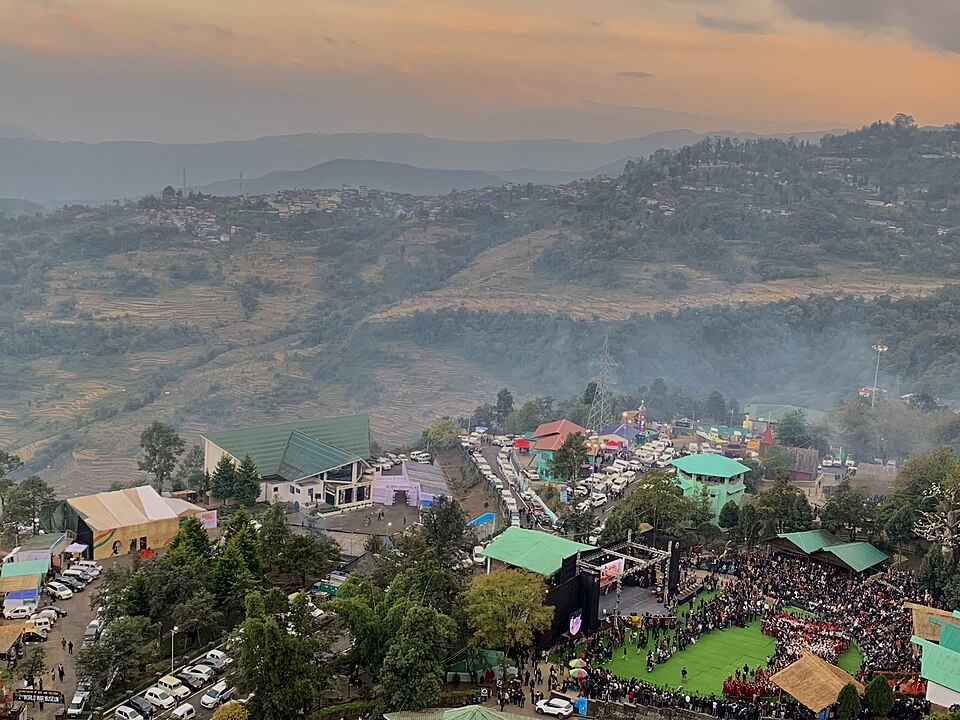
Ten days of performances, food and traditional games at a purpose-built heritage village outside Kohima, and the single best opportunity to hear a dozen Naga languages in one place.
The basics
| Dates | 1–10 December, annually |
| Location | Kisama Heritage Village, about 12 km from Kohima |
| Organiser | Government of Nagaland, since December 2000 |
| Why December | Timed around Nagaland Statehood Day on 1 December |
The festival was created to encourage interaction between Nagaland's communities and to give the state's cultural heritage a single, visible platform. It has since become the state's largest tourism event by a wide margin, which is worth knowing, because it means booking early is not optional.
What actually happens
Kisama is laid out as a set of morungs (traditional dormitory structures), one for each participating community, built in that community's architectural style. Each morung is staffed by people from that community, serving their food and showing their crafts. Walking the row of morungs is the core of the experience and the most efficient cultural education available anywhere in the state.
- Main arena performances: dance, song and ceremonial display, rotating through the communities across the ten days.
- Indigenous games: including Naga wrestling (kene), in which two competitors grip a cloth tied at the opponent's waist and try to put them on the ground. Using the legs is not allowed.
- Food: every morung cooks. Expect pork with bamboo shoot, smoked meat, axone (fermented soybean), and chillies used seriously rather than decoratively.
- Crafts and textiles: weaving, woodcarving, bamboo and cane work, sold directly by the makers.
- Night events: the Hornbill National Rock Contest and associated music programmes run in Kohima in the evenings.
Getting there and staying
- Fly or train to Dimapur. It has the state's airport and its main railway station. Guwahati is the larger alternative hub, about 8–10 hours away by road.
- Dimapur to Kohima is roughly 70 km and takes two to three hours by shared taxi or bus.
- Kohima to Kisama is about 12 km. Shuttle services run during the festival; taxis are plentiful but priced accordingly.
- Accommodation in Kohima fills months in advance for the festival period. Homestays in surrounding villages are often both cheaper and better, and are how many visitors end up having the conversations they remember.
- Permits. Check the current Inner Line Permit and foreign national registration requirements with the Nagaland government before you book. These rules have changed more than once.
Phrases worth having
English works at Kisama. Nagamese works better, and using it is received as a courtesy rather than an intrusion. These are the ones that come up.
| English | Nagamese |
|---|---|
| Hello. | Hello.greetings and thanks are said in English |
| How are you? (formal) | Apni kinika ase? |
| I am fine. | Moi bhal ase. |
| Have you eaten? (friendly greeting) | Bhaat khaishe? |
| What is your name? | Apni laga naam ki ase? |
| Where are you from? | Apni kot para ahise? |
| How much does this cost? | Itu kiman daam ase? |
| I want to buy this. | Moi itu kinibole mon ase. |
| This is delicious. | Itu bishi bhal lage. |
| This is very good! | Itu bishi bhal ase! |
| Please speak slowly. | Morom para aaste koribi. |
| I don't understand. | Moi bujhi nai. |
| I don't speak Nagamese. | Moi Nagamese kobo najane. |
| Where is the market? | Bazar kute ase? |
| It is cold today. | Aji thanda ase. |
If you want to greet someone in their own community language rather than in Nagamese, greetings across the three languages has Ao and Sümi as well.
A few notes on etiquette
- Ask before photographing people, particularly elders in ceremonial dress. Most people say yes. Being asked is the point.
- Use `apni`, not `toi`. The informal second person is for friends and children; using it with an older stranger reads as dismissive. See the Nagamese grammar guide.
- Morungs are hosted spaces. You are a guest in each one. Buying something or eating something is a normal way to reciprocate.
- December is cold in Kohima. It sits at around 1,400 m. Evenings get genuinely cold, and a lot of first-time visitors underpack.
Sources and further reading
Grammar descriptions on this page are drawn from the reference material listed below and from the community phrase set behind the translator. Where the sources disagree with each other, or a speaker's correction disagrees with both, the speaker's usage is followed.
- Government of Nagaland, Department of Tourism: festival programme and official information
- Hornbill Festival: history and background
- NagaTranslate community phrase set: source of the Nagamese phrases listed