Nagamese: the creole that holds Nagaland together
Nagaland has more than a dozen mutually unintelligible languages and one shared solution to that problem. Nagamese is nobody's ancestral tongue and almost everybody's second one, and it is the language you will actually hear in a Dimapur market, a Kohima taxi, or a church notice board.
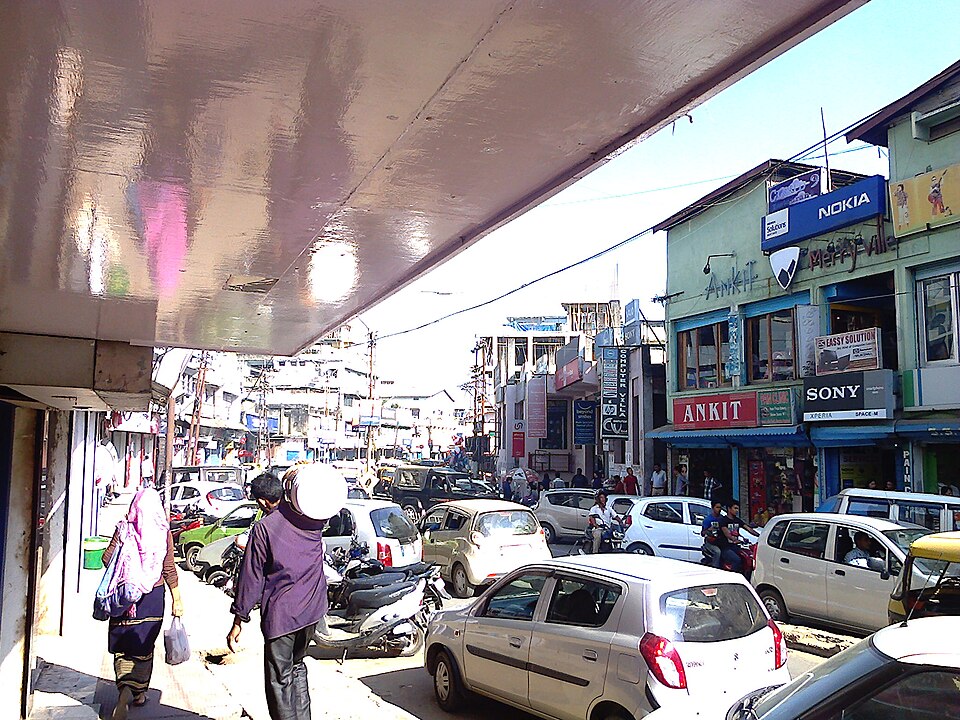
What Nagamese actually is
Nagamese (also written Naga Creole or, in older linguistic literature, Naga Pidgin) is an Assamese-lexified creole spoken across the Indian state of Nagaland. Most of its vocabulary comes from Assamese, the language of the plains immediately to the west. Its grammar is far simpler than Assamese grammar: verbs are not conjugated for person, there is no grammatical gender to speak of, and case is handled by a small set of postpositions that never change shape.
That combination is what makes it useful. Nagaland is home to a large number of Naga ethnic groups whose languages, though often related, are not mutually intelligible: an Ao speaker and a Sümi speaker cannot simply talk to each other. English is the official language of the state, but fluency is unevenly distributed. Nagamese fills the gap in between, and it does so at almost every level of daily life: markets, buses, hospitals, radio, government offices, and a great deal of church activity.
Where it came from
The usual account traces Nagamese to trade. For centuries, Naga communities in the hills exchanged goods with Assamese speakers in the plains: salt, dried fish, cloth and metal moving uphill, cotton, chillies and forest produce moving down. Contact of that kind produces a contact language, and the one that emerged took its words from Assamese because Assamese was the language of the larger market.
What turned a trade jargon into a full creole was the twentieth century. When Nagaland became a state in 1963, English was adopted as the official language, but at that point only a small minority spoke it fluently. Teachers explaining arithmetic to a classroom of children from three different language backgrounds reached for Nagamese, and so did officials, nurses, and preachers. A language used for everything gradually acquires the grammar to handle everything.
Nagamese is written in the Roman script. This is partly a legacy of Baptist missionary printing, which established Roman orthography for several Naga languages, and partly sheer practicality: it is what fits on a phone keyboard. There is no single official spelling standard, which is why you will see kinika and kineka, bishi and bisi, apni and apuni, all for the same words.
How the grammar works, in five minutes
Nagamese is a Subject–Object–Verb language: the verb goes at the end. Once you accept that, a surprising amount falls into place, because the language marks tense with a small number of endings and does not change the verb for who is doing the action.
Pronouns
| English | Nagamese | Notes |
|---|---|---|
| I / me | moi (also mui) | Unchanged in every tense |
| you (formal) | apni / apuni | Use with elders and strangers |
| you (informal) | toi / tumi | Friends, children, peers |
| he / she | tai | No gender distinction |
| we | amikhan | Literally "I-plural" |
| they | taikhan | -khan is the general plural |
-khan pluralises nouns too: manuh "person" → manuh khan "people".The three tenses you need first
Present continuous uses the verb stem followed by ase, the all-purpose copula. Past attaches -ishe/-se to the stem. Future uses -bo. Notice that moi never changes:
Negation
There are two negation strategies, and choosing between them is one of the first things that marks out a confident speaker. nai after the verb negates a completed action. A na- prefix on the verb negates knowledge, ability or habit.
nai on its own also means "no" and "there isn't": Moi laga paise nai: "I don't have money."
Possession with laga
Possession is beautifully regular. Put laga between the possessor and the thing possessed, in that order, and you are done: no agreement, no inflection.
| English | Nagamese |
|---|---|
| my book | Moi laga kitab |
| your friend | Toi laga friend |
| his name | Tai laga naam |
| my name is Agniva | Moi laga naam Agniva ase |
| where is my phone? | Moi laga phone kute ase? |
For a full treatment (postpositions, question formation, imperatives, conditionals and the polite -bi ending) see the Nagamese grammar guide.
Phrases that get you through a day
Every phrase below is drawn from NagaTranslate's community phrase set. Where a formal and an informal version differ, both are given: getting this wrong is the most common way a visitor sounds rude by accident.
Meeting people
| English | Nagamese |
|---|---|
| Hello. | Hello.greetings are said in English |
| Have you eaten? (everyday greeting) | Bhaat khaishe? |
| Yes, I have eaten. | Hoy, moi khaishe. |
| How are you? (formal) | Apni kinika ase? |
| How are you? (informal) | Toi kinika ase? |
| I am fine. | Moi bhal ase. |
| What is your name? (formal) | Apni laga naam ki ase? |
| My name is … | Moi laga naam … ase. |
| Where are you from? | Apni kot para ahise? |
| I am from Dimapur. | Moi Dimapur para ahishe. |
| I live in Dimapur. | Moi Dimapur te thake. |
| See you tomorrow. | Kali dekha hibo. |
| Thank you. | Thank you.said in English |
When you are stuck
| English | Nagamese |
|---|---|
| I don't understand. | Moi bujhi nai. |
| Please speak slowly. | Morom para aaste koribi. |
| Can you repeat that? | Apni itu aabar koibo paribi? |
| I don't speak Nagamese. | Moi Nagamese kobo najane. |
| I need help. | Moike help lage. |
| Where is the hospital? | Hospital kute ase? |
| Call me. | Moike call koribi. |
| Wait a moment. | Olop ruk. |
Shopping and eating
| English | Nagamese |
|---|---|
| How much does this cost? | Itu kiman daam ase? |
| Where is the market? | Bazar kute ase? |
| I want to buy this. | Moi itu kinibole mon ase. |
| I don't have money. | Moi laga paise nai. |
| This is delicious. | Itu bishi bhal lage. |
| The food is ready. | Khana tayar ase. |
| Come and eat. | Ahi khai lobi. |
| I am hungry. | Moi bhuk lagi ase. |
| I am thirsty. | Moi tio lagi ase. |
Feelings and small talk
| English | Nagamese |
|---|---|
| I am happy. | Moi khushi ase. |
| I am sad. | Moi dukhi ase. |
| I am very tired. | Moi bishi tired ase. |
| I have a headache. | Moi laga matha bisi ase. |
| It is raining. | Pani girti ase. |
| It is cold today. | Aji thanda ase. |
| I love you. | Moi tomai bhal pau. |
| This is very good. | Itu bishi bhal ase. |
More categories, including numbers and a search box, live in the phrasebook. You can also practise any of these in conversation with NagaChat.
The hundred-word core
If you learn nothing else, learn these. They appear in a very large share of everyday Nagamese sentences, and several of them do grammatical work far beyond their dictionary meaning.
| Nagamese | English | Nagamese | English |
|---|---|---|---|
hoy | yes | nai | no / not / isn't |
bhal | good | biya | bad |
dangor | big | soto | small |
bishi / bisi | a lot, very | olop | a little |
etiya | now | aji | today |
kali | tomorrow (also yesterday) | goni kal | yesterday |
yete | here | tate | there |
itu | this | utu | that |
ghor | house | bazar | market |
pani | water | bhaat / khana | rice / food |
rasta | road | manuh | person |
morom | love | morom para | please |
kintu | but | karone | because |
tak | until | bhaat khaishe? | have you eaten? (a greeting) |
Question words
| Nagamese | English | Example |
|---|---|---|
ki | what | Apni ki khaishe?: What did you eat? |
kot / kute | where | Bazar kute ase?: Where is the market? |
kinika / kineka | how | Apni kinika jane?: How do you know? |
kile | why | Apni kile jaishe?: Why did you go? |
kitia | when | Apni kitia ahibi?: When will you come? |
kiman | how much / how many | Kiman manu ase?: How many people are there? |
Who speaks it, and where
Nagamese is spoken statewide, but not evenly. It is densest in and around Dimapur, the commercial hub and the most ethnically mixed part of Nagaland, where it functions as a genuine first language for some families, including communities with no historical connection to any Naga language. It thins out in villages where a single community predominates and everyone shares an ancestral language.
You will also hear it outside the state: in parts of upper Assam near the Nagaland border, in Naga student communities in Shillong, Guwahati and Delhi, and in diaspora churches. Younger urban speakers mix in a lot of English, and increasingly some Hindi: sentences like Moi laga laptop restart koribi are entirely normal Nagamese.
For a broader picture of the state's language landscape, see the tribes of Nagaland and their languages.
Common questions
Is Nagamese the same as Assamese?
No. Most Nagamese words come from Assamese, so an Assamese speaker will recognise a lot of vocabulary, but the grammar has been drastically simplified and comprehension is not reliable in either direction. See Nagamese and Assamese compared.
Is Nagamese an official language?
English is the sole official language of Nagaland. Nagamese has no official status, which is part of why so little written material and so little digital text exists for it.
How hard is Nagamese to learn?
Unusually easy, as languages go. There is no verb agreement, no gender, no case inflection and a small set of tense markers. If you already speak Hindi, Bengali or Assamese you will find a large amount of the vocabulary familiar.
What script is Nagamese written in?
The Roman script, almost universally. Spelling is not standardised, so the same word can appear several different ways in writing.
Can I translate English to Nagamese online?
Yes, the NagaTranslate translator handles English, Hindi, Assamese, Bengali, Manipuri and Nepali to and from Nagamese, with voice input and audio output. Accuracy is good for everyday sentences and weaker for technical or literary text.
Sources and further reading
Grammar descriptions on this page are drawn from the reference material listed below and from the community phrase set behind the translator. Where the sources disagree with each other, or a speaker's correction disagrees with both, the speaker's usage is followed.
- NagaTranslate community phrase set: community-contributed phrase pairs, the source of every example on this page; not independently audited
- Bhattacharjya, Dwijen (2000), *The Genesis and Development of Nagamese: its social history and linguistic structure*: PhD dissertation, City University of New York; the standard scholarly description of the language
- Bhattacharjya, Dwijen (1994), “Nagamese: Pidgin, Creole or Creoloid?”: California Linguistic Notes 24(2): 34–50; review and summary available online
- Nagamese creole: background on classification and history
- Census of India 2011, Language tables: speaker distribution